Understand fascia as part of how the body senses and regulates An In-Depth Course on Fascia and the Nervous System

A 5-hour online intensive exploring fascia as a living, sensory, fluid, and responsive tissue, and its intimate relationship with the nervous system, interoception, inflammation, and Restorative Yoga.

Audrey Favreau has trained more than 1,300 people in Restorative Yoga since 2015.

Enroll in the course for €99

One-year access, fully on demand.

Hands adjusting a strap around a folded blanket resting on blocks
  • FormatFully pre-recorded, on demand
  • Length5 hours of teaching and guided practice
  • Practices3 guided practices, about 90 minutes
  • MaterialsTranscripts, written summary, Course Companion PDF
  • AccessOne year
  • CE credits5 CE credits

How our understanding of fascia is changing

Fascia was long treated as little more than wrapping, a passive material surrounding the “real” structures of the body.

But today, this understanding is changing.

Research increasingly shows that fascia is not only structural. It is also sensory, communicative, adaptive, and deeply connected to the nervous system. It plays a role in movement, proprioception, interoception, fluid regulation, inflammation, tissue quality, and the body’s response to stress.

In this in-depth course, we explore fascia through a broad and integrative lens, combining emerging science, embodied experience, and Restorative Yoga practice.

Who this course is for

This course is for you if you are:

  • a yoga teacher wanting a deeper and more nuanced understanding of fascia;
  • a Restorative Yoga practitioner or teacher;
  • interested in the relationship between fascia, stress, and nervous system regulation;
  • curious about interoception, inflammation, hormones, and embodied experience;
  • looking for a more integrative and less force-based way of working with the body.

You do not need to be a specialist in anatomy to benefit from this course. It is designed to be accessible, rich, and grounded in both practice and reflection.

What you will explore

Inside the course, we explore:

  • what fascia is and how it functions as a continuous network throughout the body;
  • fascia as a fluid, sensory, and communicative tissue;
  • fascia, interoception, and autonomic state;
  • fascia and inflammation;
  • fascia, hypermobility, and joint stability;
  • fascia and hormones;
  • fascia and depression;
  • complementary perspectives on fascia, acupuncture, DNA, and trauma;
  • how Restorative Yoga may support regulation, tissue quality, and embodied awareness.
Feet resting on a bolster supported by blocks, in a reclining pose

The practice dimension

This course is not only theoretical.

Throughout the training, I guide you through three practices designed to help the material become felt, not only understood. These include:

  • a guided check-in and self-massage practice;
  • a supported Restorative Yoga pose for nervous system regulation;
  • a final integrative practice to help the learning settle into the body.

Together, these practices offer about 90 minutes of guided embodied exploration.

Why this course matters

In many movement spaces, the body is still approached mainly through muscles, flexibility, and performance.

This course offers a different perspective.

It invites us to see the body as an intelligent, interconnected system, one in which fascia is not only a structural tissue, but also part of how we sense, adapt, protect, regulate, and heal.

From this perspective, practice becomes less about pushing deeper and more about listening more precisely.

What students are saying

5 star rating

Fascinating and Accessible

Brenda Nakdimen

I enjoyed the in-depth links provided to research on this topic, the practical applications and the embodied experience included in this course. I highly rec...

Read More

I enjoyed the in-depth links provided to research on this topic, the practical applications and the embodied experience included in this course. I highly recommend this course to teachers and practitioners of Restorative Yoga especially, as a reminder for why this work matters, especially in today’s busy world.

Read Less
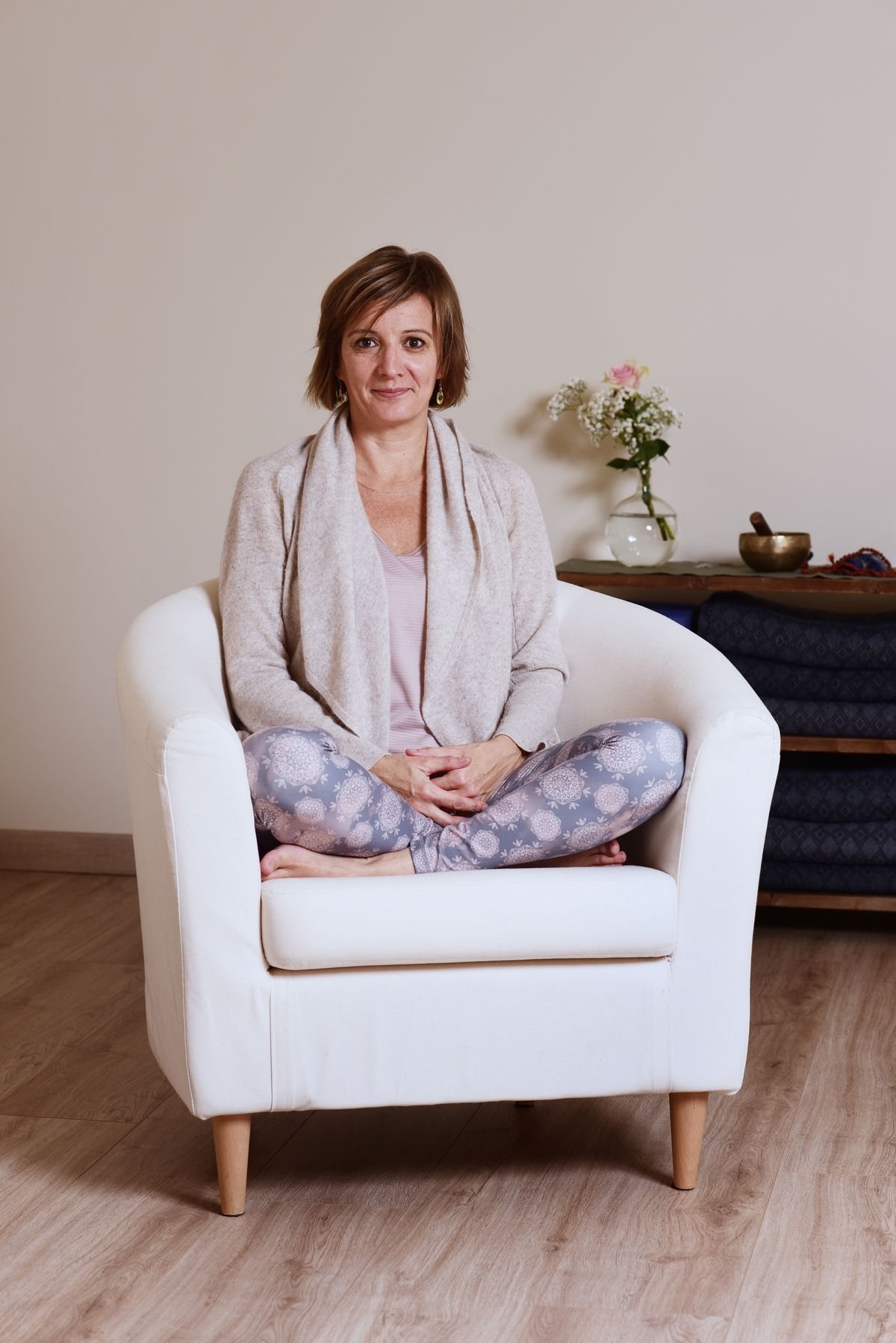
Audrey Favreau sitting cross-legged in a white armchair in her teaching space

Your teacher

Audrey Favreau is a Restorative Yoga senior trainer and one of three designated teachers authorized to certify in Judith Hanson Lasater’s Relax and Renew® lineage. Her teaching combines neuroscience, functional anatomy, and therapeutic practice, with a strong focus on nervous system regulation.

Since 2015, she has trained more than 1,300 people and supported hundreds of teachers in integrating Restorative Yoga into their work and daily lives. Based in Italy’s Monferrato Hills, Audrey teaches a precise and compassionate approach to rest, resilience, and reconnection with the body.

She is the author of The Teacher’s Guide to Restorative Yoga, with a foreword by Lizzie Lasater, published by North Atlantic Books in June 2026.

Contact Audrey

Choose your path

Course only

€99

An In-Depth Course on Fascia and the Nervous System, one-year access

Enroll now

Bundle

€429

Fascia & Restorative Foundations Bundle, instead of €489 when purchased separately

Choose the bundle

FAQ

  • Is this course live?

    No. This is a fully pre-recorded, on-demand course, divided into sections so you can move through it at your own pace.

  • How long will I have access?

    You will have one year of access from the date of purchase.

  • Does this course qualify for CE credits?

    Yes. This course includes 5 CE credits.

  • How do I access the course after purchase?

    Once you enroll, you will receive immediate access to the course platform, where all lessons and materials will be available.

  • Can I choose the bundle instead?

    Yes. You can also enroll in the Fascia & Restorative Foundations Bundle if you would like both the course and Restorative Yoga: The Foundations at a reduced price.

  • What props do I need for the practices?

    For the guided practices, I recommend having: a yoga mat, a chair, a bolster, 3 blankets, a yoga belt or strap, a sandbag, 2 yoga bricks, 2 yoga blocks, an eye pillow. If you don’t have everything, you can adapt with what you have at home. What matters most is to recreate the shape and symmetry of the poses while staying stable, supported, and comfortable.

  • Which book do you recommend as a companion to this course?

    I warmly recommend my book, The Teacher’s Guide to Restorative Yoga, as the ideal companion to this course. The course will take you deeper into fascia, the nervous system, interoception, and regulation, while the book offers a broader practical foundation in Restorative Yoga and the supported poses.

A supported reclining pose, holding a large cushion

Listen to the body more precisely

Enroll in the course for €99

One-year access, fully on demand.